
Modern Software Testing: A Guide to Different Testing Approaches
Introduction
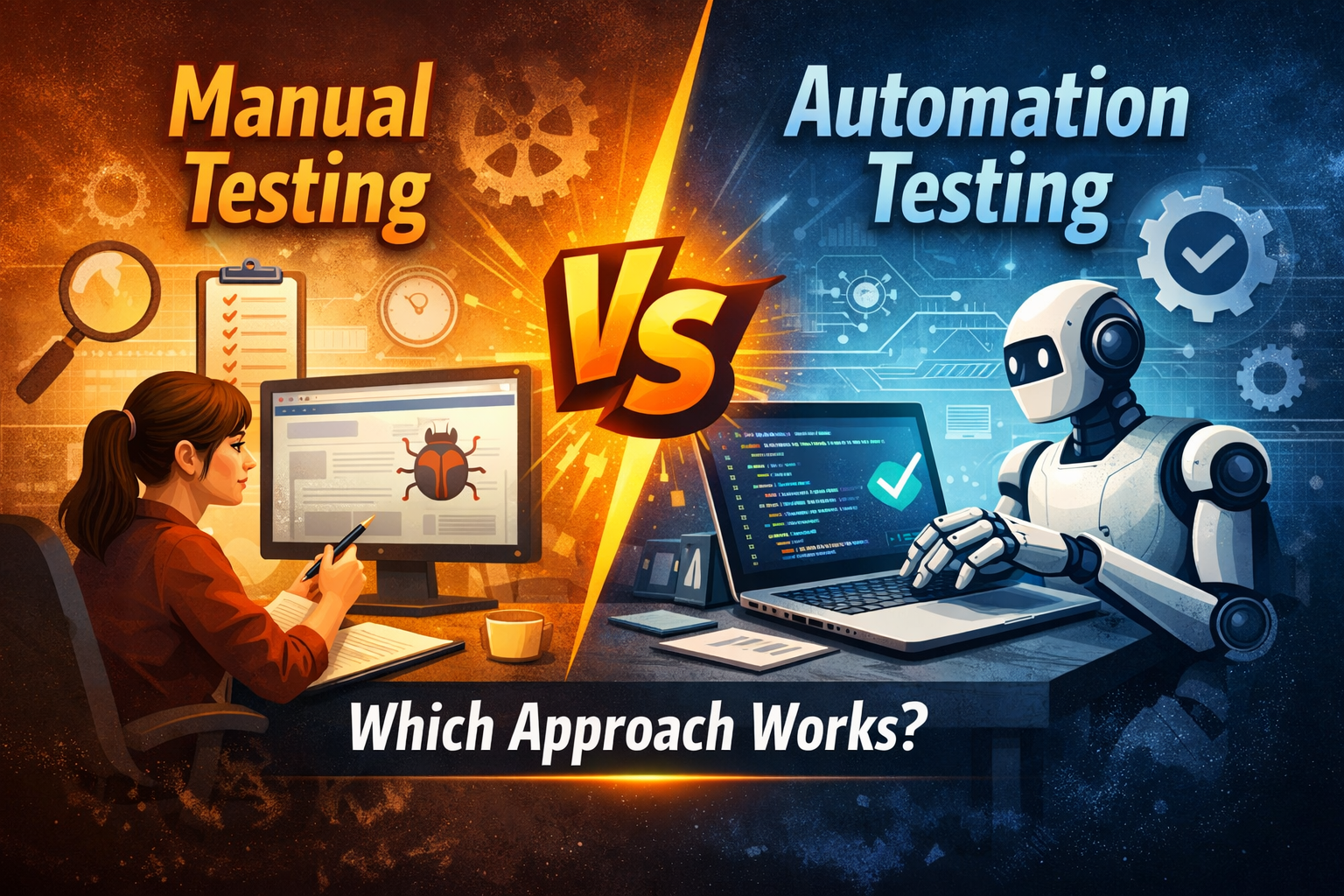
Software testing plays a critical role in delivering reliable and high-quality applications. In modern software development, teams often rely on two main testing approaches: manual testing and automation testing. Each method has its own advantages, limitations, and ideal scenarios. Understanding the differences between manual testing vs automation testing helps organizations choose the right strategy for their real software projects. While manual testing focuses on human interaction and exploratory testing, automation testing uses tools and scripts to execute tests quickly and efficiently.
Understanding Manual Testing
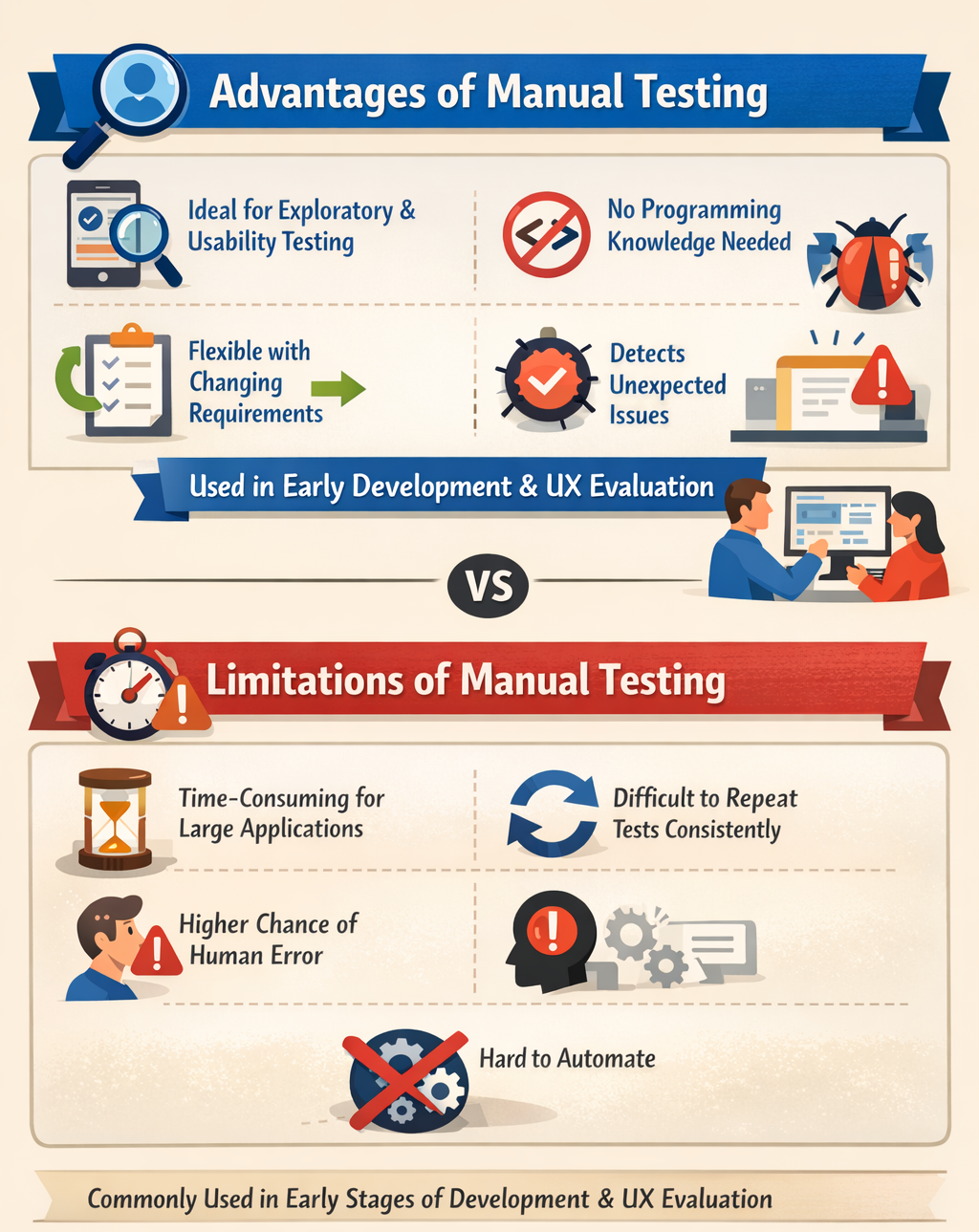
Manual testing involves testers executing test cases manually without using automated tools. Testers simulate real user behavior by interacting with the software to identify defects, usability problems, and functional errors.
Manual testing is particularly useful when testing new features, UI elements, and scenarios where human judgment is required.
Understanding Automation Testing
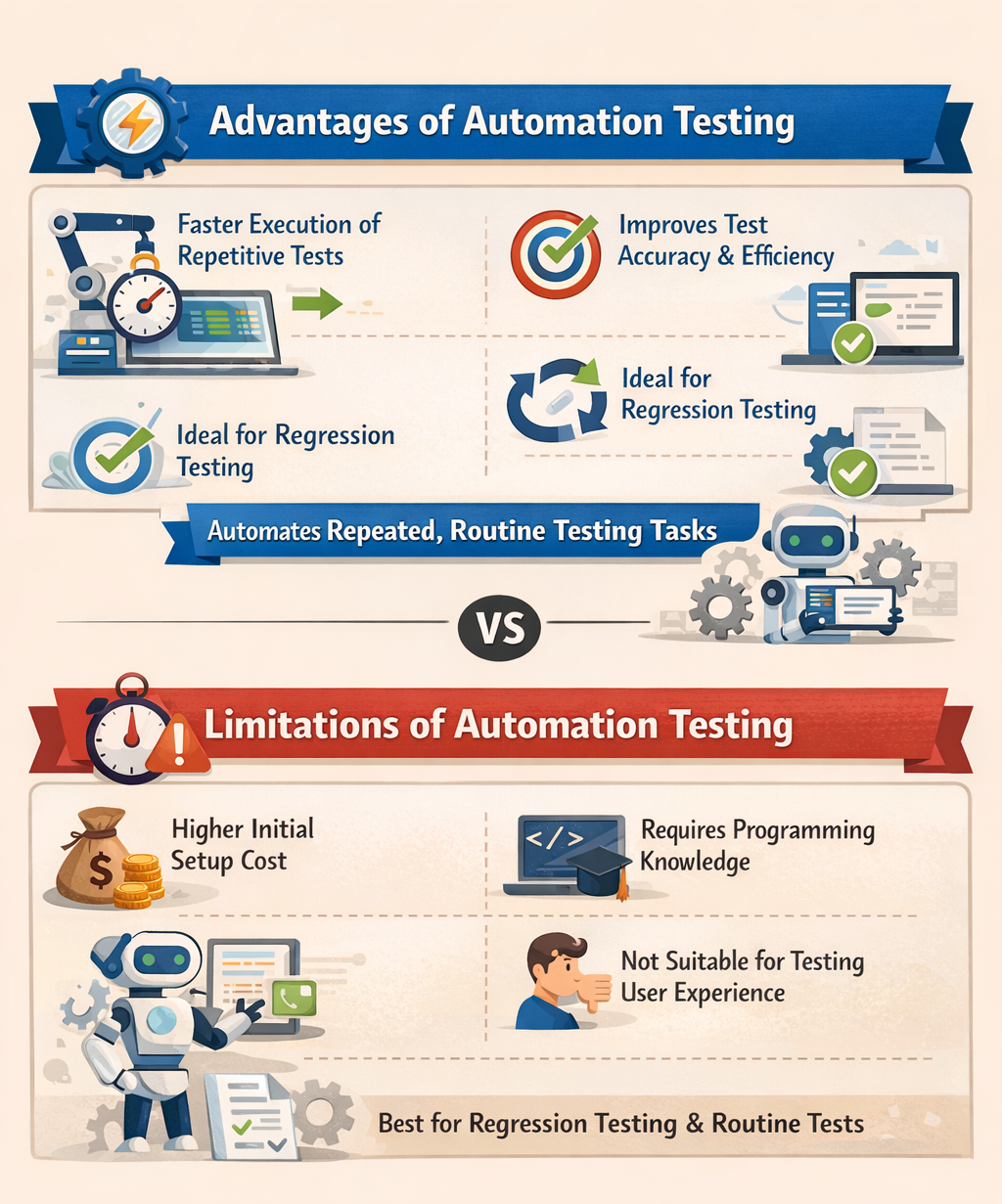
Automation testing involves using testing tools and scripts to automatically execute predefined test cases. Popular automation tools include Selenium, Cypress, Playwright, and TestNG. Automation testing is designed to reduce manual effort and increase testing speed, especially in large and complex projects.
Automation testing is highly effective for tasks that need to be repeated frequently during the development lifecycle.
Automation testing is widely used in projects that require continuous integration and continuous delivery (CI/CD).
Manual Testing vs Automation Testing in Real Projects
In real software development projects, most companies adopt a hybrid testing approach that combines manual and automation testing.
Manual testing is best suited for:
- UI and usability testing
- Exploratory testing
- Short-term or small projects
Automation testing works best for:
- Regression testing
- Performance testing
- Repetitive test scenarios
By integrating both approaches, teams can achieve better software quality, improved efficiency, and faster product releases.
Conclusion
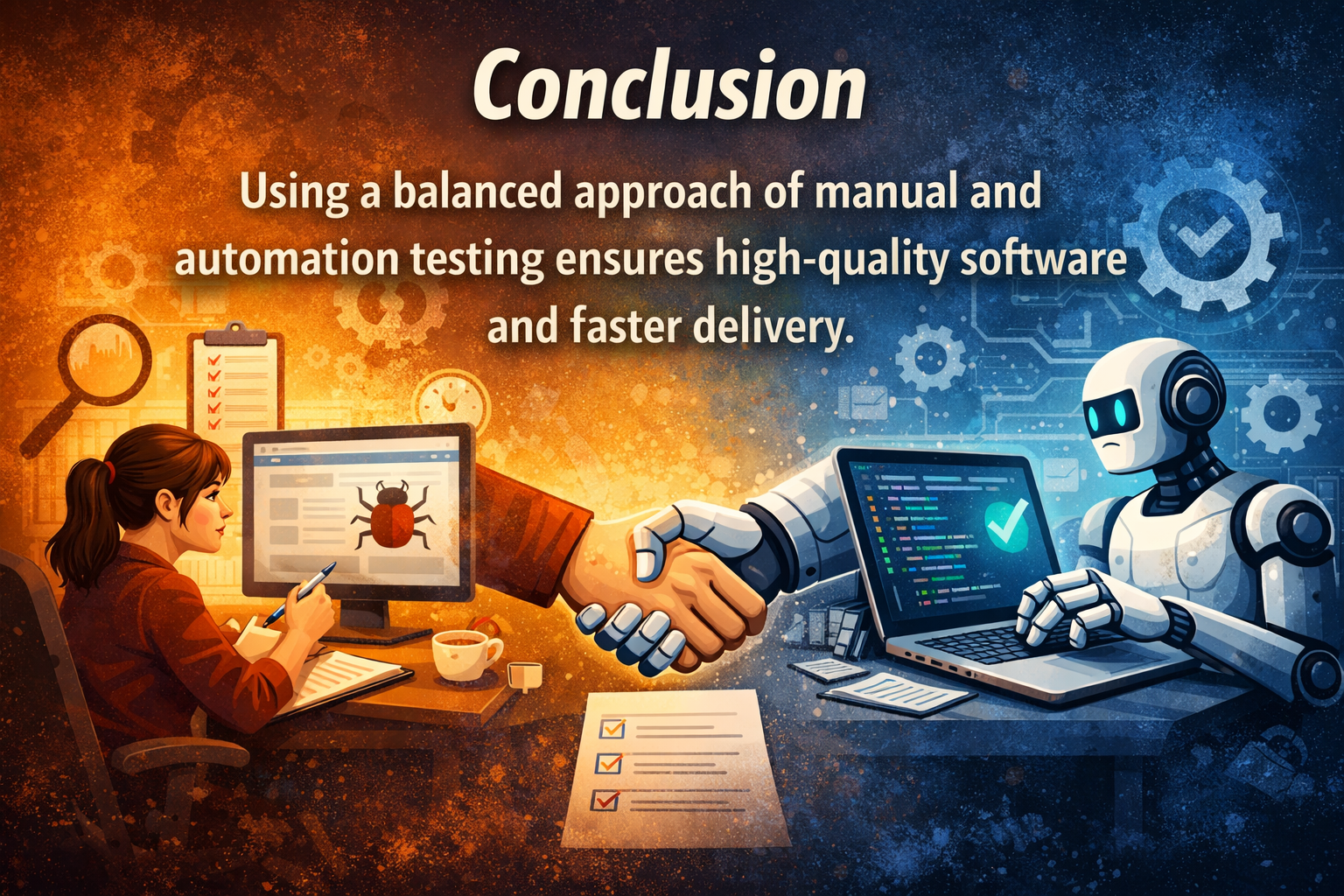
Manual testing is essential for evaluating usability, user experience, and exploratory scenarios. Automation testing improves efficiency by handling repetitive and large-scale testing tasks. Most modern development teams use a combination of manual and automation testing for optimal results. The choice between manual testing vs automation testing depends on project requirements, timeline, and testing complexity. Using the right balance between both methods ensures high-quality software and faster delivery in real projects.