
Self-Healing Software Systems: Improving Reliability in Modern IT Infrastructure
Introduction
In today’s digital world, organizations rely on modern IT infrastructure for smooth business operations and uninterrupted services. Industries like banking, healthcare, e-commerce, and cloud computing require highly reliable software systems. As IT environments become more complex, maintaining software reliability becomes challenging. To address this, many organizations use self-healing software systems, which automatically monitor, detect, and resolve technical issues in real time. These systems improve system resilience, support automated recovery, and help reduce downtime, making IT operations more efficient and reliable.
How Self-Healing Software Systems Work
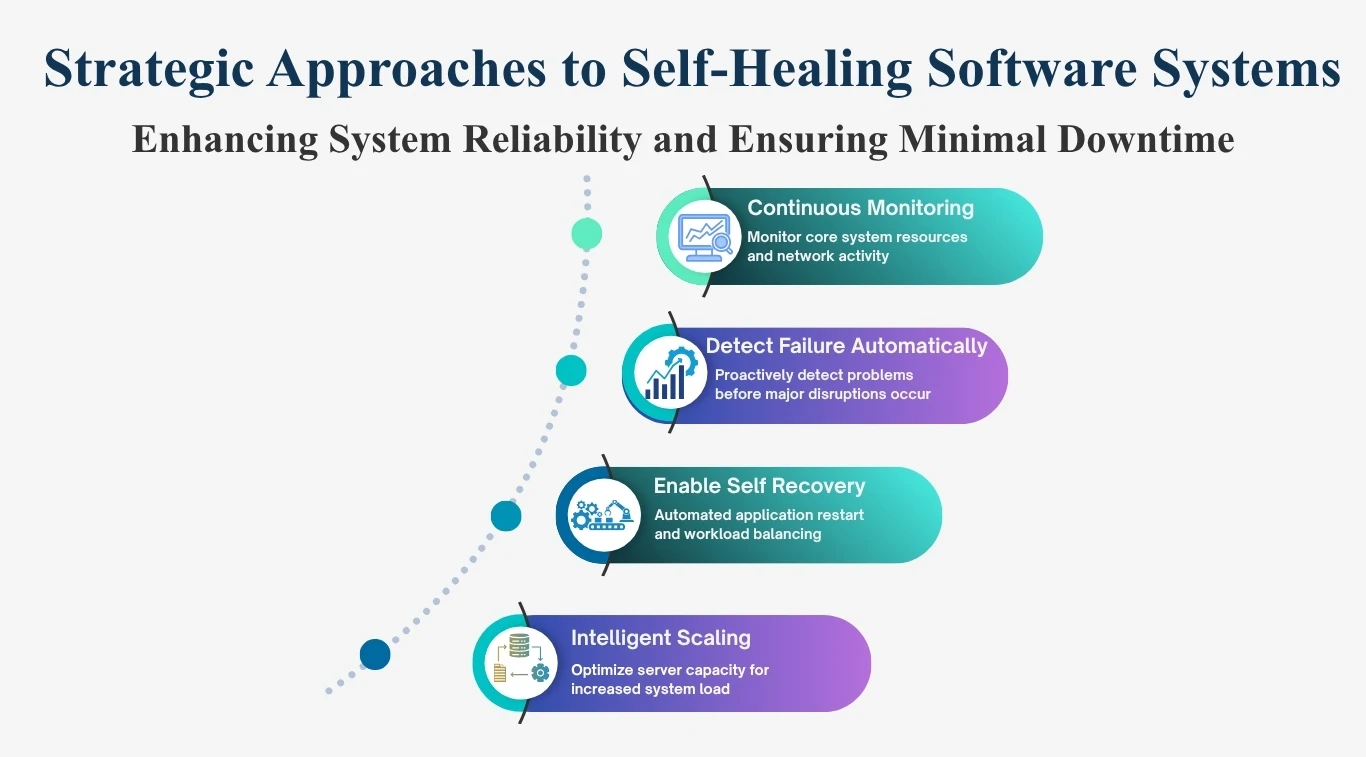
Self-healing software systems continuously monitor critical performance metrics, including:
- CPU usage: Prevents overload.
- Memory consumption: Stops memory leaks.
- Server health: Ensures servers are operational.
- Response time: Maintains user experience.
- Database connectivity: Keeps data flowing smoothly.
This continuous monitoring helps identify abnormal behavior at an early stage before it impacts end users. Once a failure is detected, the system automatically triggers recovery actions.
Common automated responses include:
- Restarting failed services: Automatic restarts without manual intervention.
- Reconnecting database sessions: Re-establishing dropped connections seamlessly.
- Clearing cache and temporary files: Freeing up critical system resources.
- Allocating additional resources: Adding power where it's needed most.
- Scaling workloads automatically: Adapting to traffic spikes in real time.
For example, if a web server crashes, the system can automatically restart the service without human intervention. Similarly, if memory usage exceeds safe limits, the system can clear temporary files, optimize resource allocation, and restore normal performance. This proactive approach significantly improves software reliability and minimizes service interruptions.
Business Impact and System Resilience
System resilience plays a critical role in ensuring uninterrupted digital services. Even a few minutes of downtime can lead to:
- Financial loss: Direct impact on revenue streams.
- Customer dissatisfaction: Frustrated users abandoning the platform.
- Operational disruption: Internal workflows grinding to a halt.
- Reputational damage: Long-term loss of trust and brand value.
By implementing self-healing software systems, organizations reduce dependency on manual support teams and strengthen their modern IT infrastructure.
Key Benefits
- Improved service availability: Guaranteeing higher uptime metrics.
- Reduced downtime: Minimizing the impact of unexpected failures.
- Faster incident recovery: Slashing mean time to recovery (MTTR).
- Better business continuity: Ensuring operations never stop.
- Lower operational costs: Decreasing the need for manual IT intervention.
These systems are especially valuable in industries such as banking, healthcare, retail, and cloud platforms, where service availability is mission-critical.
Conclusion
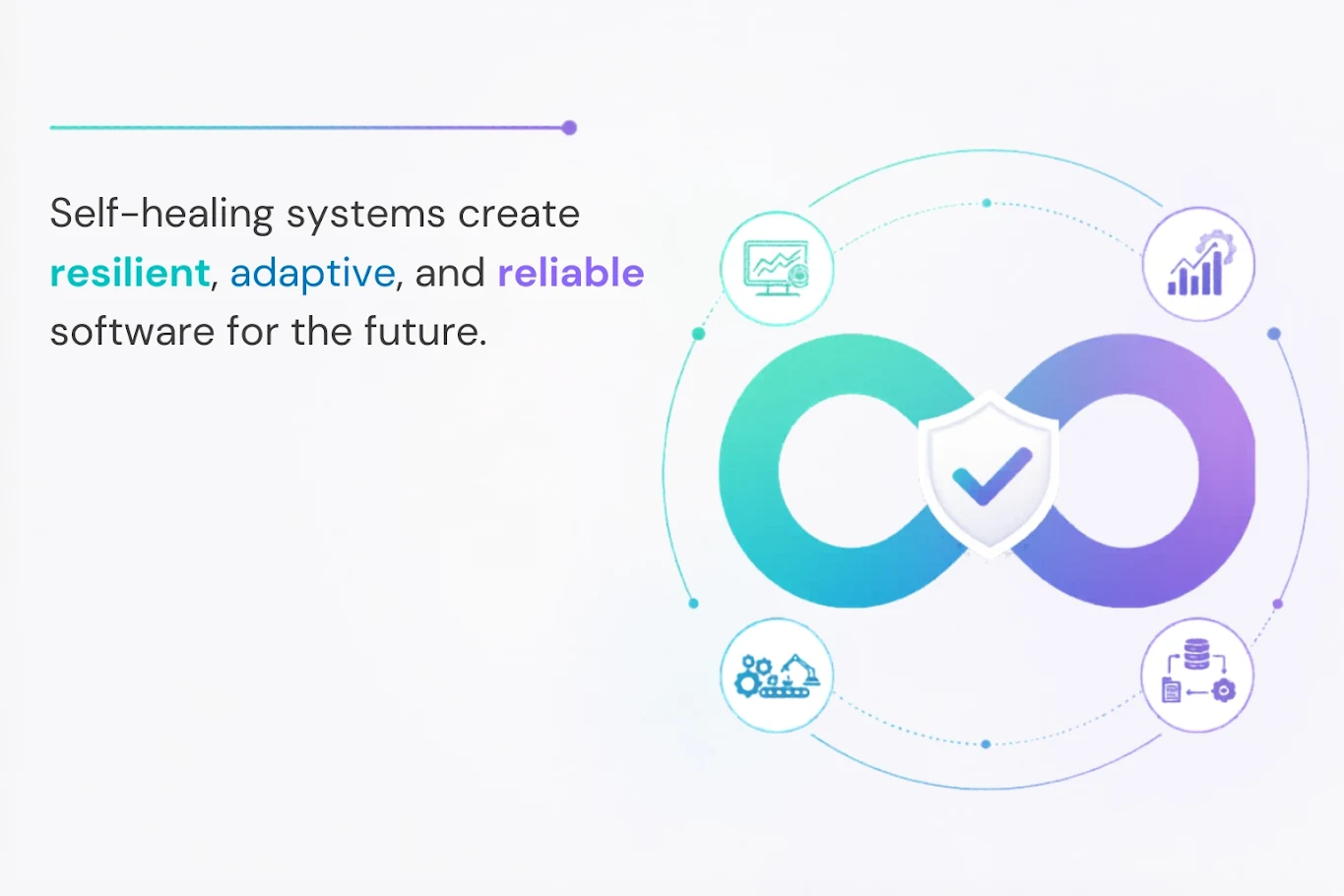
In conclusion, self-healing software systems are transforming modern IT operations by improving software reliability, reducing downtime, and strengthening system resilience. These intelligent solutions enhance operational efficiency, lower maintenance costs, and ensure continuous service availability. As digital environments continue to grow in complexity, adopting self-healing technologies will be essential for long-term business success and improved user trust.
