
AI in Boardrooms: Transforming Strategic Decision-Making
Introduction
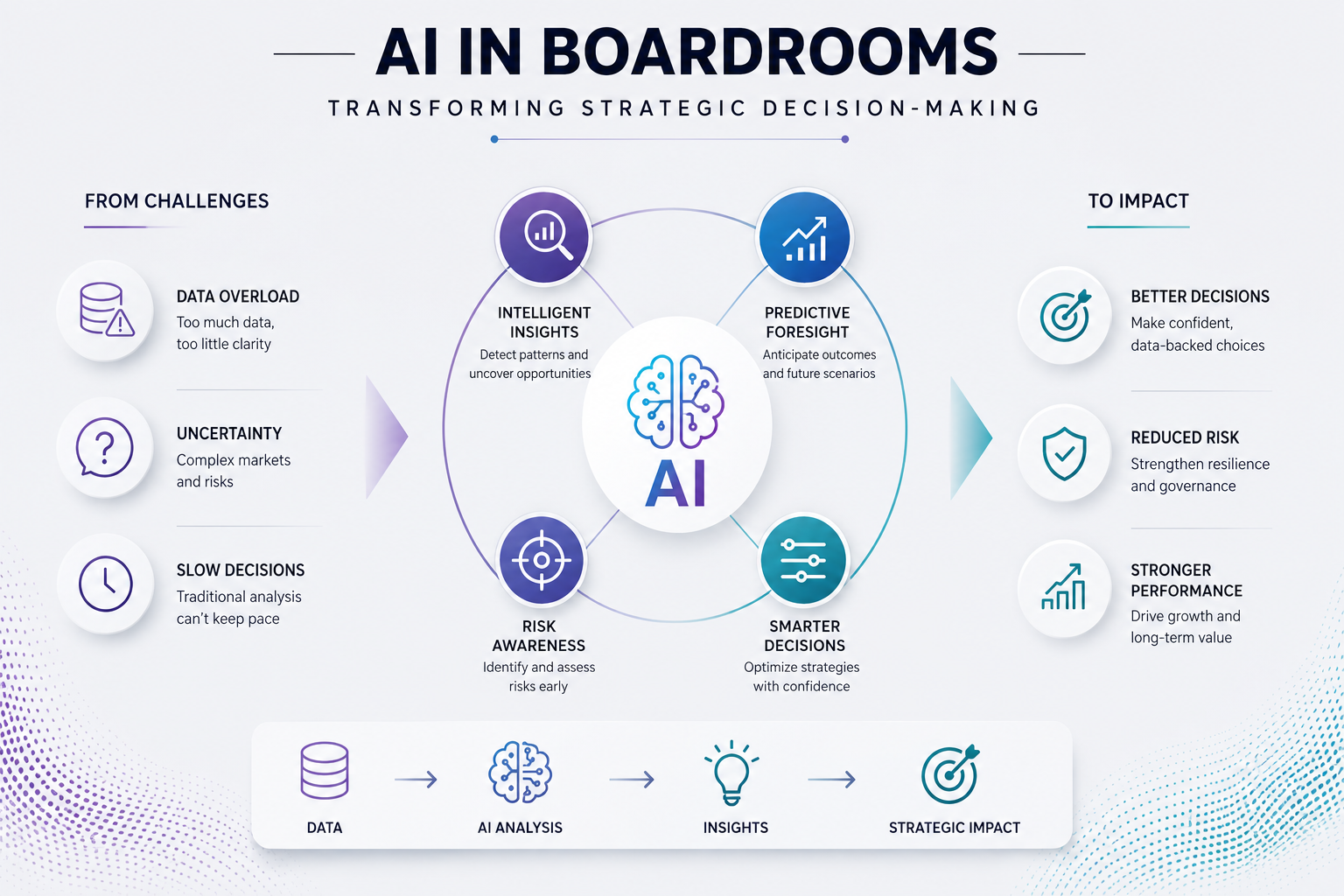
The modern boardroom is undergoing a profound transformation as organizations increasingly adopt Artificial Intelligence to enhance strategic decision-making. Traditional approaches rooted in intuition and historical analysis are rapidly being replaced by intelligent systems capable of processing vast volumes of data in real time. This evolution is enabling enterprises to operate with greater agility, precision, and confidence in an increasingly competitive landscape.
The Evolution of Strategy
Corporate strategy has historically relied on leadership experience and market understanding. However, in today's dynamic business environment, these approaches often fall short in delivering timely and accurate insights. The emergence of data-driven decision making is redefining how organizations approach complex challenges, allowing leaders to base strategies on actionable insights derived from large-scale data analysis rather than assumptions.
How AI Powers Boardroom Strategy
Real-Time Strategic Intelligence
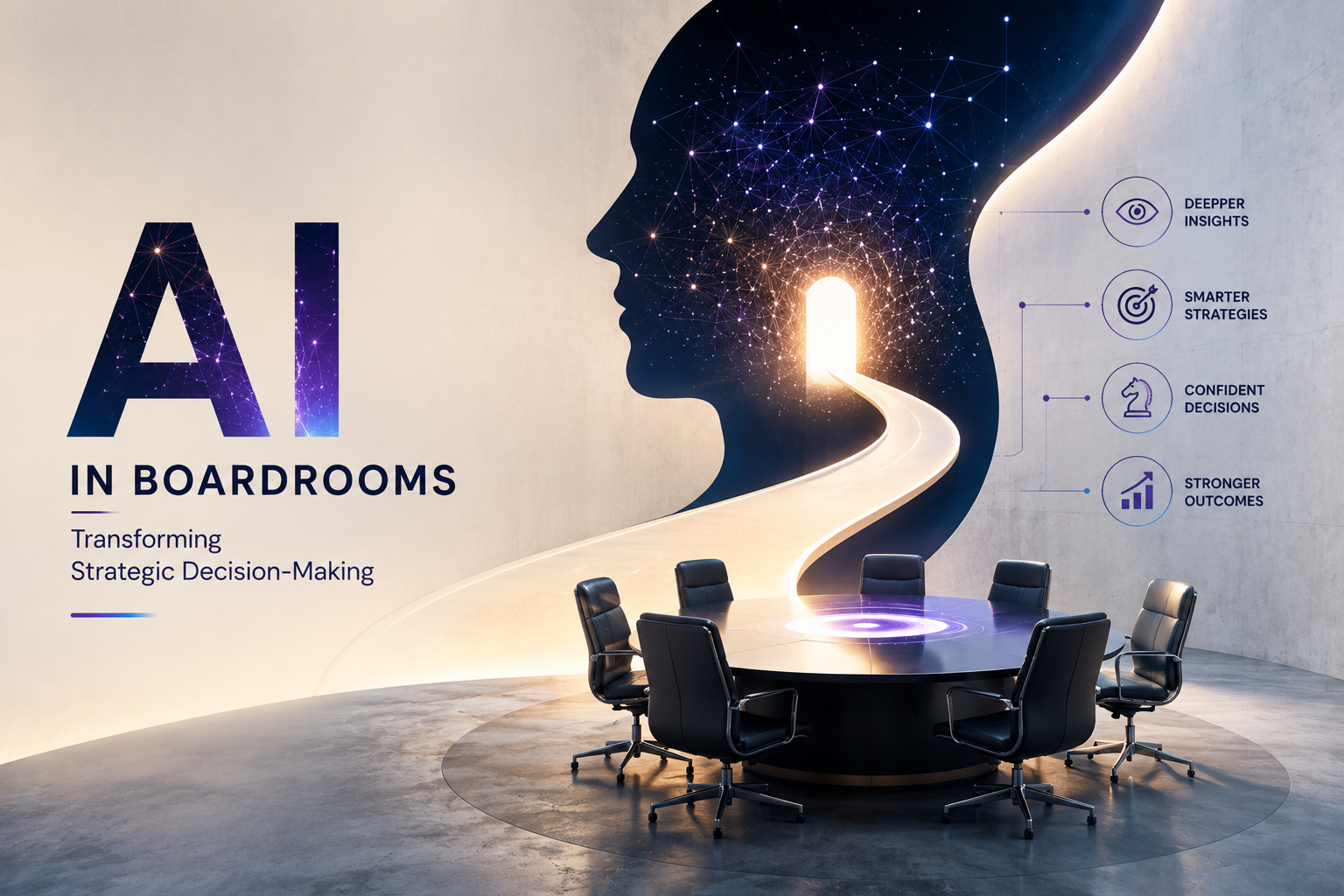
AI continuously processes real-time data streams, enhancing business intelligence capabilities and enabling executives to make informed decisions based on up-to-date insights.
Scenario Planning & Predictive Analysis
Leveraging predictive analytics, AI evaluates multiple business scenarios, helping organizations anticipate risks, assess potential outcomes, and identify new growth opportunities.
Accelerated Decision Cycles
AI streamlines data analysis workflows, accelerating decision-making and enabling faster responses to evolving market conditions.
Reduction of Cognitive Bias
By utilizing structured data and advanced algorithms, AI strengthens strategic decision-making by minimizing bias and ensuring consistent, objective evaluation of business choices.
Real-World Impact
Across industries, AI is transforming critical business functions—from financial forecasting and market intelligence to operational optimization. These advancements underscore the growing importance of intelligent systems in driving performance, innovation, and long-term value creation at scale.
Conclusion
Artificial Intelligence has evolved beyond a supporting capability to become a fundamental pillar of modern enterprise strategy. Organizations that successfully integrate AI into their boardroom processes are better positioned to navigate complexity, enhance decision quality, and sustain a competitive advantage.
The future of leadership lies in the seamless integration of human expertise with intelligent systems. By embracing this synergy, enterprises can unlock smarter decisions, foster innovation, and achieve sustainable growth in an increasingly data-driven decision making world.